Showing posts with label cow. Show all posts

Thursday, 7 July 2011

Yoghurt


We often have too much milk now that I am milking twice a day again. One of my favourite things to do with milk (since I don't normally drink it) is make yoghurt. And this is the method I use:

Measure 1.8L of milk. Bring to 80 degrees C for 15 minutes (I use the Thermomix) - to kill off unwanted bacteria (this step is considered optional by some). I choose to work with 1.8L so that I can fit the finished product into my 2L Thermoserver.

Cool the milk to 37 degrees C, or, if you're milking a cow, you will have a daily supply of milk at the perfect temperature!

To the 37 degree C milk, add about 1/2 cup of prepared natural yoghurt ('starter') - either some you've made yourself previously, or the nicest store-bought natural yoghurt you can find (one with lots of good bacteria and no additives). Alternatively, add some powdered yoghurt starter (usually purchased from a cheese-making supplier, not the sachets in the supermarket).

Mix very gently to combine. If using the Thermomix, set to speed 1 for a few minutes so that yoghurt starter is mixed through well. If not, simply mix with a whisk very gently until the starter seems well combined with the milk.
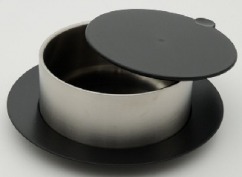
Thermoserver

Pour gently into a warm Thermoserver, Thermos, jars wrapped in towels, EasiYo maker, or any other way you can figure to keep the yoghurt at 37 degrees overnight. Do not bump or move, simply set aside and let the bacteria do its thing.


In the morning, you should have firmly set yoghurt - and it will become more firm in the fridge. You may eat it right away, or use it in different ways...

My children adore homemade jam layered with lots of creamy natural yoghurt - what a sweet treat! Plum is a current favourite. We love to strain our yoghurt through a cheesecloth (or chux) lined sieve (put a jug underneath) to make Greek-style yoghurt, or we leave it even longer to make labeneh - yoghurt cheese. To us, labeneh is similar to bought cream cheese and can be used in the same way. One more way we use a lot of our yoghurt is as a condiment served with curries, or made into raita. Yum!

Monday, 28 March 2011

A Herd Update

It has been 1.5 years since we got our first cow and calf, and I am continuing to learn every day. In the last few weeks, Honey went to live at my friends' farm, as they will run a horned herd over there. She's currently with the bull, and they hope to be milking her by the new year!

Honey, 1.5 years old, the day she left

It was a little hard to let her go, being hand-reared by us and so loving and quiet. But I am rapt we'll be able to visit. It also means I can raise more calves without crowding the paddocks if some of them move on!

Wags and Poppy are a year old now, and growing big and strong. They both love a scratch under the chin and are very tame. Wags is destined for the freezer when he's about two years old. Poppy will hopefully be in calf by this Winter sometime, delivering in a year or so.

We are hoping for a calf from Lucy before the end of the year.

Today Lucy was Artificially Inseminated (AIed), so will hopefully deliver a Jersey calf around Christmastime. If today didn't work, we need to try again in 3 weeks' time. I've been charting her cycles and reading all about the signs of bovine fertility for a few months now, another learning curve.

I am still milking every day, but getting much less - about 6L, once a day. I make a lot of yoghurt, and the labneh I make from the yoghurt is so creamy and delicious. I can't make enough of it to keep it up to the family! I think I'll tackle fetta this week. Jersey fetta is very yummy!
Labneh - photo from this tutorial

Sunday, 30 May 2010

Our House Cow Journey Continues


I began milking Lucy when Wags was a few weeks old. Until then, he and Poppy the foster calf shared all the milk. As they began to eat a little grain and some hay and grass, I decided to separate Lucy and Honey from them during the day, giving her several hours to graze the grass in the orchard and house paddock, and then I brought her in to be fed, checked over and milked before releasing her back into the small paddock with the babies and Honey for the night. I did this around four times each week, taking around 3 to 4 litres each milking. The other days they all grazed together. This routine went well for a little while, and then Lucy was only giving 2 litres at each milking, and then just a litre for the final couple of milkings last week. And then I gave up. Why go to all the bother of mixing feed, setting up, milking, cleaning the dairy, the buckets and everything for a mere litre of milk? As I led Lucy back to the small paddock, her udder would swell and teats fill with the rest of the milk she had withheld from me, ready to feed her babies she'd been apart from all day.


Last week we let them all into a larger paddock to allow us to do some maintenance on their small paddock and the areas we graze them inside electric fence tape. I'm not milking Lucy for awhile. We've slashed their paddocks and we'll harvest some manure and hay from near their pens to use in some of the raised garden beds I've emptied out recently. Do I still have a House Cow? Or a dairy breed with her calves let loose in the paddock? I'm trying to convince them they're still our dairy herd by encouraging them back to the water troughs daily for their minerals, perhaps some hay or another treat, and some checking over and brushing. Poppy and Honey especially love to be brushed, I think because they've had less affection from Lucy, being foster calves. I use a horse brush on them and they mostly love careful strokes around their face and ears.

When it's time to wean the calves, I'll bring Lucy back to the small paddock. I'm not sure on the exact management of the herd from there, but I'll try to get her into once-a-day milking again. I don't think I'll bother with another foster calf for a little while.

We have just castrated Wags using the banding method, which seems to us to have been a humane way to carry out the process. His job now is to eat grass and grow big!

The next thing we need to think about is getting Lucy artificially inseminated (AIed), which is usually done three months after a dairy cow calves.

So much to consider... And to think that once I just thought that cows ate grass, drank water, made manure and existed with little human intervention!

Friday, 12 February 2010

A Dry Cow

Nosey Honey

We stopped milking Lucy in mid-January and so Honey was weaned at almost five months old. At first she was a little sad to not have milk from Lucy, but overall she has been fine, and her condition certainly hasn't dropped at all.

Toward the end of Lucy feeding Honey
(she still had to be tied up to feed her, being an adopted calf)


Lucy coped well with the drying off as we did it quite gradually - from one feed a day, taking less each time during the last week. I checked her udder daily to be sure it wasn't too full, hard or hot. It took about two weeks for the udder to look quite empty and dry.

Lucy got too fat for our old milking shed door!

Lucy missed my company and waited at the fence each afternoon for some food and attention. I visit her almost daily for a scratch and to check her condition and handle her.

We cut the protein from her diet for the time that she was drying off, and she's now eating pasture and a little lucerne hay, with some copra and hemp meal mixed with supplements from time to time. She likes "salad" from the garden - arrowroot, comfrey, spent cabbages and lettuces etc. And she loves the corn stalks after we pick the cobs. They nibble pigeon pea most days now, keeping the bottom half of each bush nicely pruned.

Here's Lily (7) with Lucy and Honey recently - they're hardly diffeent in height! See they have no halters or ropes now. And little Honey's horns are growing.

Lucy's calf should be a wagyu cross (1/2 jersey, 1/2 wagyu), so should be small and dark and cute! Of course all calves are cute. It is due around March 22nd. Stay tuned!

PS - The Family Cow is a good book, recommended reading for anyone who wants to know about keeping a house cow.

Monday, 28 December 2009

Four months old

Honey is now over four months old and has grown so big! She is coping well with being gently weaned and loves to graze alongside Lucy and chew her cud in the shade. She still has the back quarters (and strips out the front) each afternoon, but in the coming couple of weeks will be completely weaned from Lucy's milk. Lucy is due to calf on March 22nd and needs time to rest.

I've been using diatomaceous earth to deter flies and other parasites - it is mixed with their other supplements into their daily feed, used as a dusting powder and sprinkled onto their bedding area. So far, I think it really is making a difference!

After much deliberation, Honey hasn't been de-horned. Yet. Apparently I don't need to decide immediately, though this is the optimum time to remove her horn buds. Because she will always be in a small herd, and has been handled from when she came here, I'm leaning toward letting her keep her horns.


I'm about to start reading The Family Cow by Dirk van Loon. I picked it up from Fishpond for under $25 and it looks to be a fairly comprehensive addition to the farm bookshelf.

This isn't the greatest photo, but it does show how huge Lucy's belly is (with still 3 months to go) and how tall Honey has become compared to Lucy.

We're still getting between 4-5L of milk each day from the front quarters, and leaving the back quarters to Honey. I have loads of milk in the fridge and freezer and numerous yoghurt and cheese experiments going on! It will be such a shock to have no homegrown milk for 2+ months.

We're always reflecting how far the girls have come in 3.5 months. They're easy to catch now, and Lucy is easy to lead. Honey isn't as well-trained to the halter as she could be. They're affectionate and curious farm-pets who have really fit into our family and routine nicely.

Wednesday, 30 September 2009

Three and a half Weeks

Lucy in her favourite corner of the paddock, looking for her herd.


Honey, resting by the fence in the sun. She licks her lips when I approach her! She is 5 weeks old.


This is the little paddock they are being kept in, it's pretty dry and sparse.

How time flies! We've had Lucy and Honey for 26 days now. It keeps getting better. I take care of the cows on my own most of the time now, and still enjoy it. I am getting used to Lucy's behaviour and learning what signals she's giving me. I've never really had to communicate with cows before!

Lucy's favourite - lucerne

We've had virtually no rain for ages and have the cows in a smaller paddock within the house paddock. We're supplementing their feed a lot. In the morning Lucy gets a bucket whilst feeding Honey which contains a mixture of dairy pellets, copra, cracked corn, calf crumble, molasses, water, dolomite, seaweed powder, sulfur and water. Almost all of it is pre-mixed in a big bin - I only add the water, molasses and minerals and combine. Then I fill a big tub with top quality lucerne mixed with a little rhodes grass and refill two water containers. During the day sometime I usually throw in another hunk of lucerne and check the water. In the afternoon Lucy has another bucket with the same mix - half whilst she feeds Honey in the pen and half in her tub in the bails for when she's being milked. Then a little more lucerne to keep her busy and I top up the water containers again. Honey has the fluffy green tops from the lucerne hay, grass in the paddock and a tiny bit of calf crumble to supplement her two feeds each day from Lucy. She also nibbles at some of the mixed feed Lucy drops on the ground but I think it's too rich for her.

I've also given Lucy some pigeon pea branches, carrots, apple cut into quarters, corn cob husks and ends and lettuce and cabbage outer leaves from the garden. I think it's all new to her so it's funny to watch her taste and feel the new foods before eating them. Oh, she didn't eat the pigeon pea much, only nibbled a few leaves and pushed it aside.

We're getting a bit more milk lately so I'm going to start making some cheese. So far I've only frozen some (in ice-cubes for smoothies and the like) and made custards and yoghurt. I have a couple of recipe, so hopefully tomorrow will allow me some time in the kitchen... Stay tuned!

This is the pen where I feed the cows and Lucy feeds Honey, they were locked here all the time for a couple of days then every night for two weeks as well. The fencing is portable panels, the shelter is a silver tarp and the bedding is sugar cane mulch hay. They sleep in here on the hay most of the time - the gate to this pen is always open now.


This is Lucy feeding Honey in the afternoon. Notice the back quarters of her udder are very full! This is after we began to feed her a fair amount of lucerne each day. I only milk out in the afternoons and that day got over 4L from the back teats.


Honey feeding in the afternoon. She feeds from Lucy twice a day at 'bucket time'. I love the froth - it gets everywhere! She normally drinks from only the front quarters but has begun to suck one back teat at most feeds as well. She still leaves us plenty of milk each day.